
Some links below go to product pages on this site that link to Amazon. As an Amazon Associate we earn from qualifying purchases. Product sizes and weight ratings come from the makers’ listings; we haven’t tested these items in person.
Measure along each wall from the corner to the first thing in the way, such as an outlet, a light switch, door casing or window trim. The shelf’s width and depth must both fit inside those two numbers. Then check the height against anything above, allow for the baseboard, and plan to anchor anything tall.
Empty corners are one of the easiest places to add storage, because nothing else fits there anyway. But corners are also where rooms are least precise. Baseboards, trim and outlets crowd in, and the walls don’t always meet at a perfect right angle.
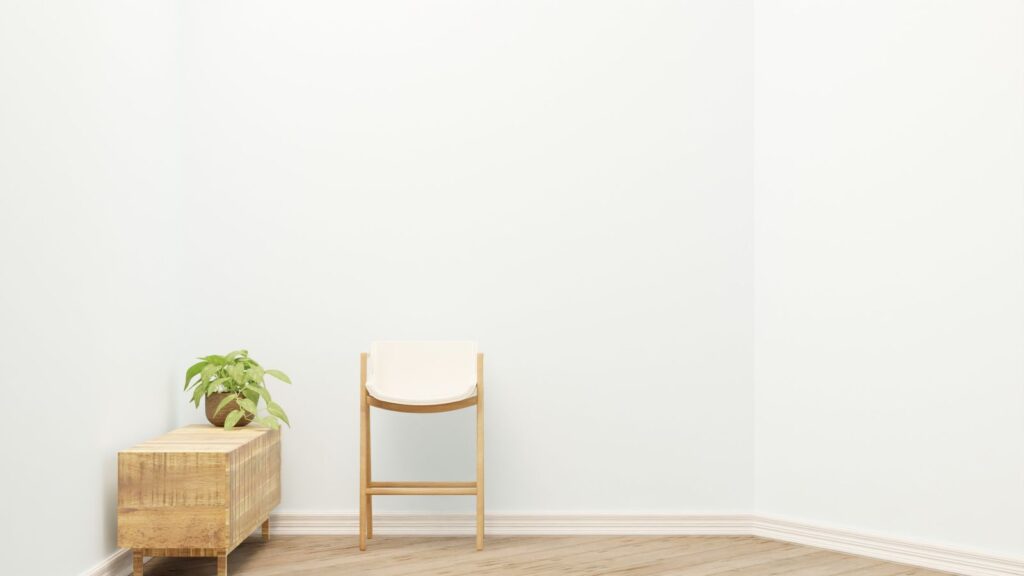
How to measure a corner
- Each wall, separately. Run the tape from the corner along wall A to the first obstacle, then do the same on wall B. Write both down. A shelf that’s 11.8 inches on each side needs at least that much clear wall on both.
- The baseboard. Measure how far it sticks out from the wall. A freestanding shelf sits against the baseboard, not the wall, so it ends up that far out on both sides.
- The height. Check for a window, a thermostat, a ceiling slope or a light fixture above the spot. For wall-mounted shelves, note where outlets and switches are so you don’t drill near the wires that feed them.
- The angle. Hold a framing square or a large book in the corner. If there’s a gap along one edge, the corner is out of square, and a rigid shelf won’t sit tight to both walls.
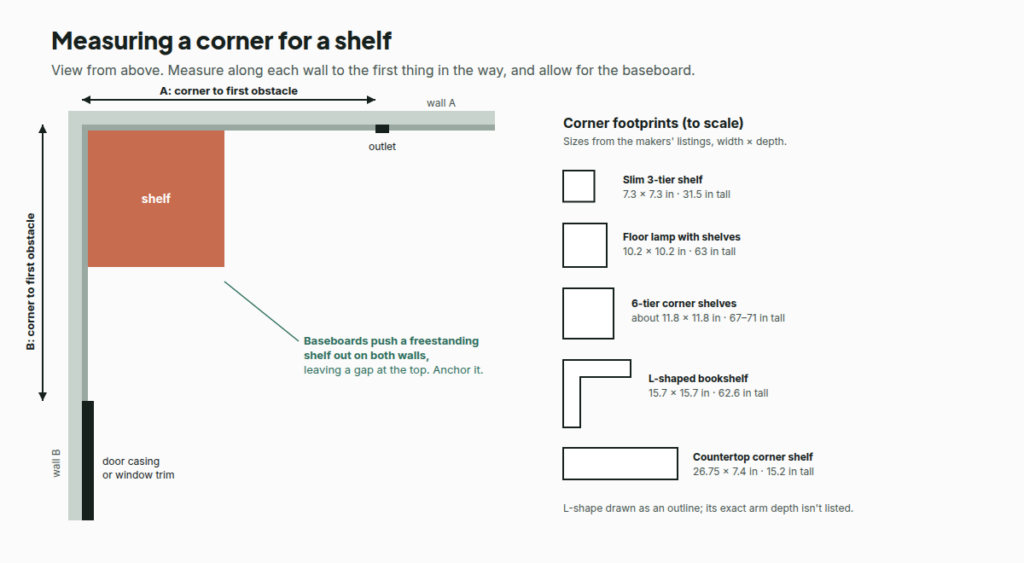
Why the baseboard matters
Because a freestanding shelf rests against the baseboard at the bottom, the top stands off the wall by the same amount. On a 70-inch shelf that small gap makes it easier to tip forward. It also eats into your measurements: a half-inch baseboard on each wall means the shelf’s outer edges sit half an inch further into the room than you planned. If the shelf has an anti-tip strap, it bridges that gap to the wall.
Tall corner shelves: what the listings say
| Shelf | Footprint (W × D) | Height | Weight rating | Anti-tip hardware |
|---|---|---|---|---|
| 6-tier industrial corner shelf | 11.8 × 11.8 in | 71.2 in | 44 lb per shelf | Anti-tip kit included |
| 6-tier corner shelf with LED lights | 11.8 × 11.2 in | 67.5 in | Not stated | Anti-toppling device included |
| 6-tier L-shaped bookshelf | 15.7 × 15.7 in | 62.6 in | 70 lb per shelf | Not stated in the listing |
The two square shelves take the same corner space, about a foot each way. The L-shaped bookshelf reaches further along both walls, which suits books and leaves the very corner open, but it needs almost 16 inches of clear wall on each side. All three are taller than five feet. The US Consumer Product Safety Commission recommends anchoring furniture that could tip if a child climbs or pulls on it (CPSC Anchor It). Put the heaviest things on the lowest shelves either way.
Tall shelves for an empty corner
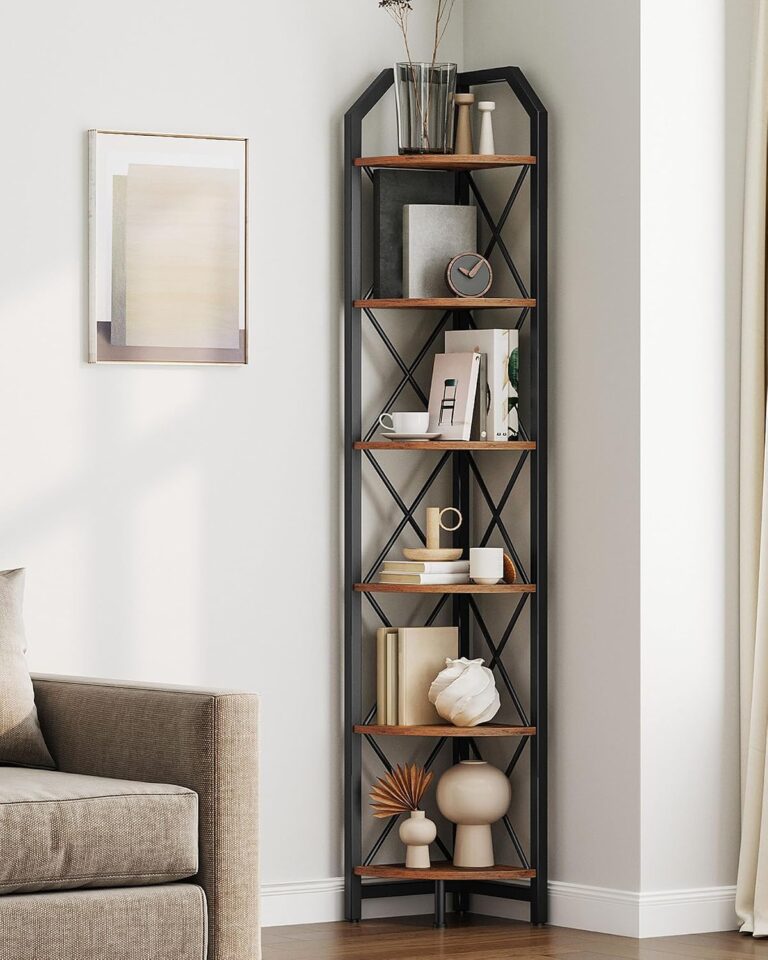
6-Tier Industrial Corner Shelf (71" Tall)
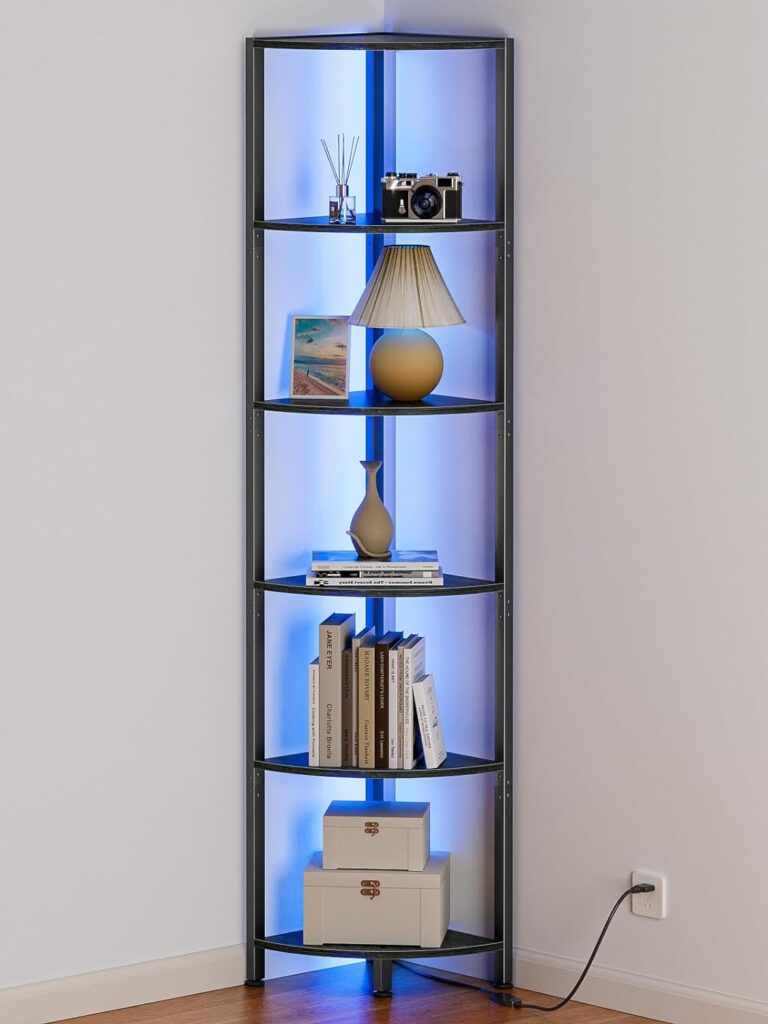
6-Tier Corner Shelf with LED Lights (67.5" Tall)
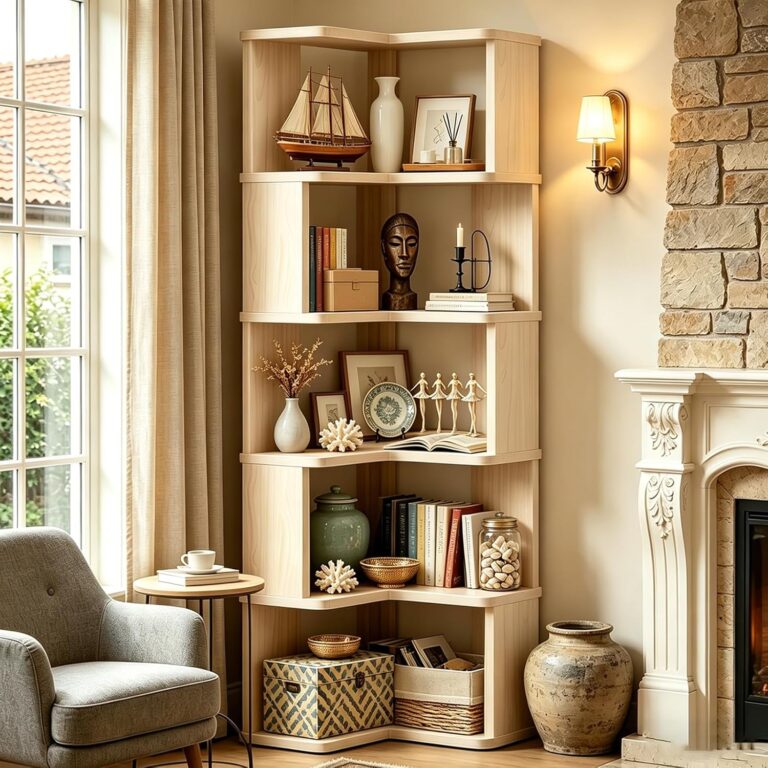
6-Tier L-Shaped Corner Bookshelf with Bookends
When the corner is small or off the floor
Not every corner has a foot of clear floor. In a bathroom or beside a toilet, the slim 3-tier shelf is only 7.3 inches each way. On a kitchen counter, a countertop corner shelf uses the dead corner behind the sink or stove; check that its 15.2-inch height clears your upper cabinets. And if the floor is taken, corner floating shelves go on the wall instead. Their listing rates each shelf at 40 lb, but what they actually hold depends on what the screws go into. Use a stud where you can, since wall studs are usually 16 inches apart (sometimes 24), and check the rating on any drywall anchors you use instead.
Corner shelves for tight spots
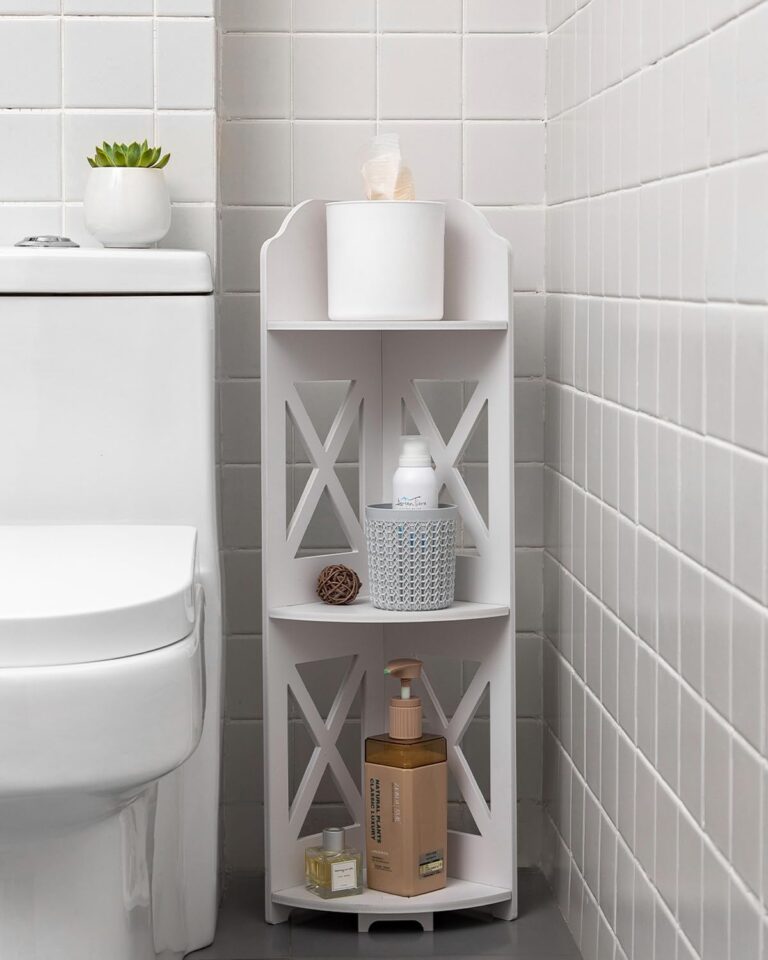
Slim 3-Tier Bathroom Corner Shelf (7.3" Wide)
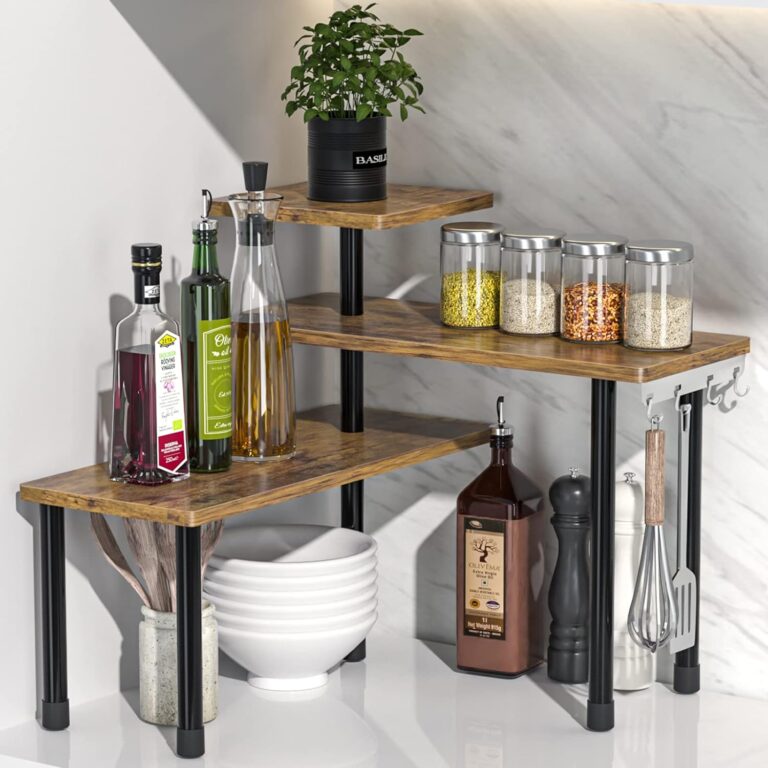
3-Tier Countertop Corner Shelf for Kitchens (Rustic Brown)
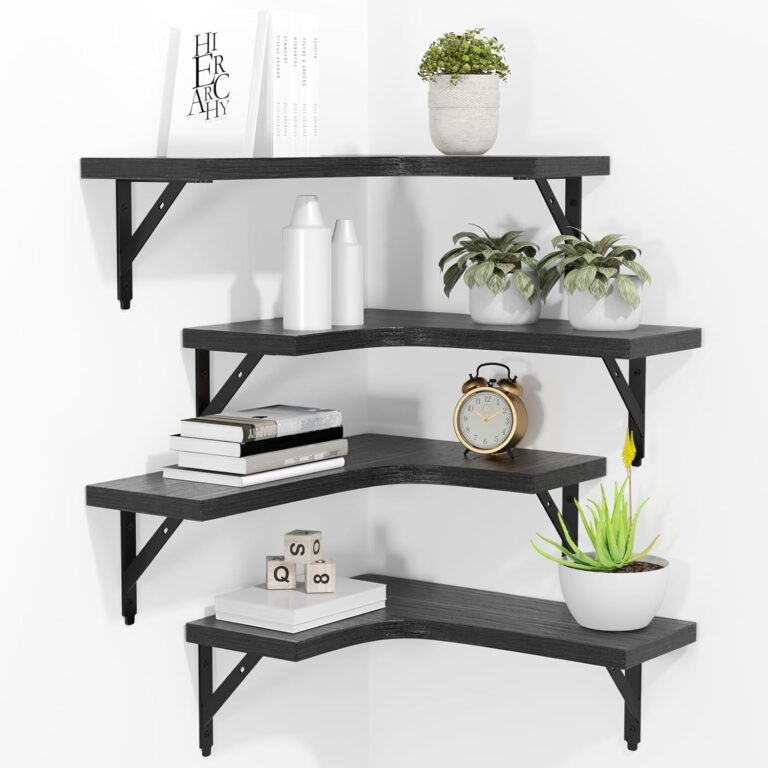
L-Shaped Corner Floating Shelves, Set of 4 (Black)
If the corner needs to do two jobs
A dark living-room corner can hold a light and storage at once. The floor lamp with shelves takes about 10 inches square. For plants, the corner plant stand with grow lights has eight tiers and timer-controlled lights, but its listing gives a load capacity of about 20 lb, so it’s for small pots rather than books.
Corner pieces that do more than store
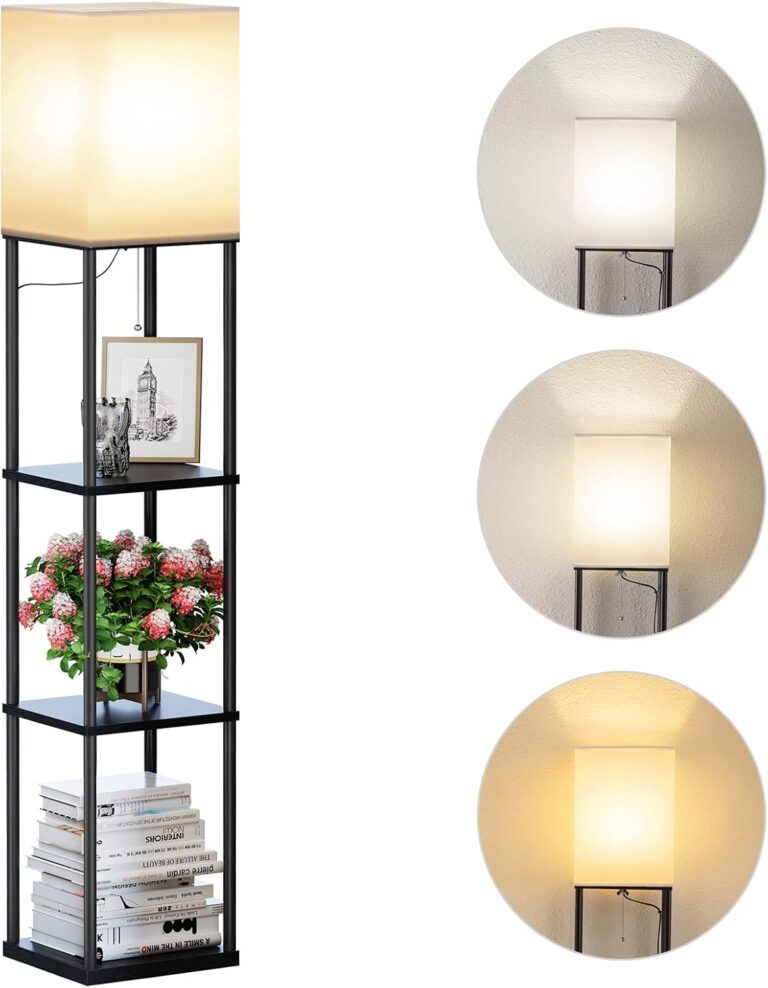
Floor Lamp with Shelves for Corners (63" Tall)
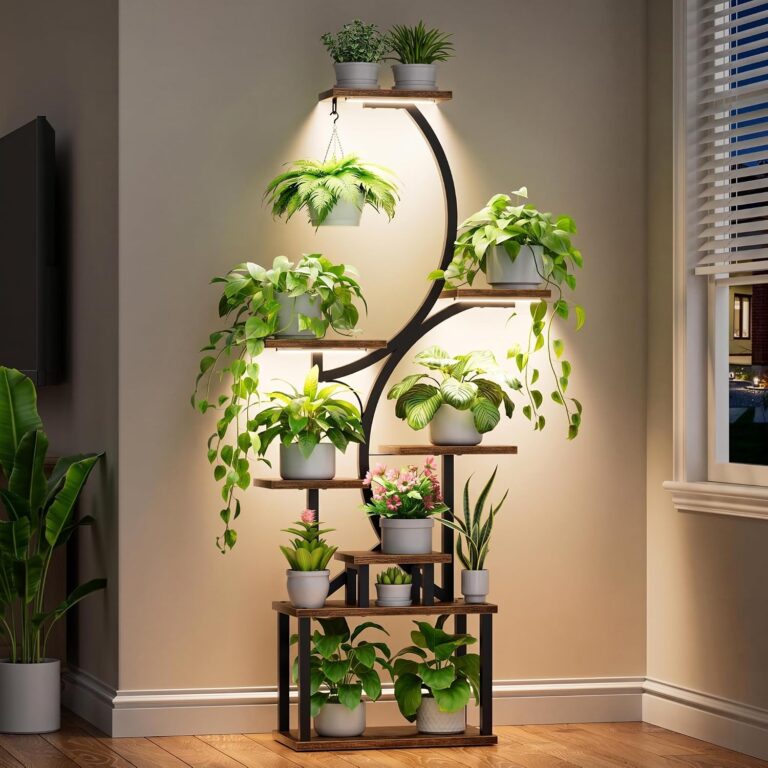
8-Tier Corner Plant Stand with Grow Lights (62" Tall)
Which one should you buy?
Go by how much clear wall you measured on each side:
- 12 in or more each side6-Tier Industrial Corner Shelf (71" Tall)Shop now
- 16 in or more for books6-Tier L-Shaped Corner Bookshelf with BookendsShop now
- Under 8 in each sideSlim 3-Tier Bathroom Corner Shelf (7.3" Wide)Shop now
- No floor space freeL-Shaped Corner Floating Shelves, Set of 4 (Black)Shop now
- A dark cornerFloor Lamp with Shelves for Corners (63" Tall)Shop now
Browse all corner storage, or check a shelf against your measurements with the Will It Fit? tool. If the corner is in a bathroom, our guide to measuring for over-the-toilet storage covers the space beside the toilet too.