
Some links below go to product pages on this site that link to Amazon. As an Amazon Associate we earn from qualifying purchases. Product sizes and capacities come from the makers’ listings; we haven’t tested these items in person.
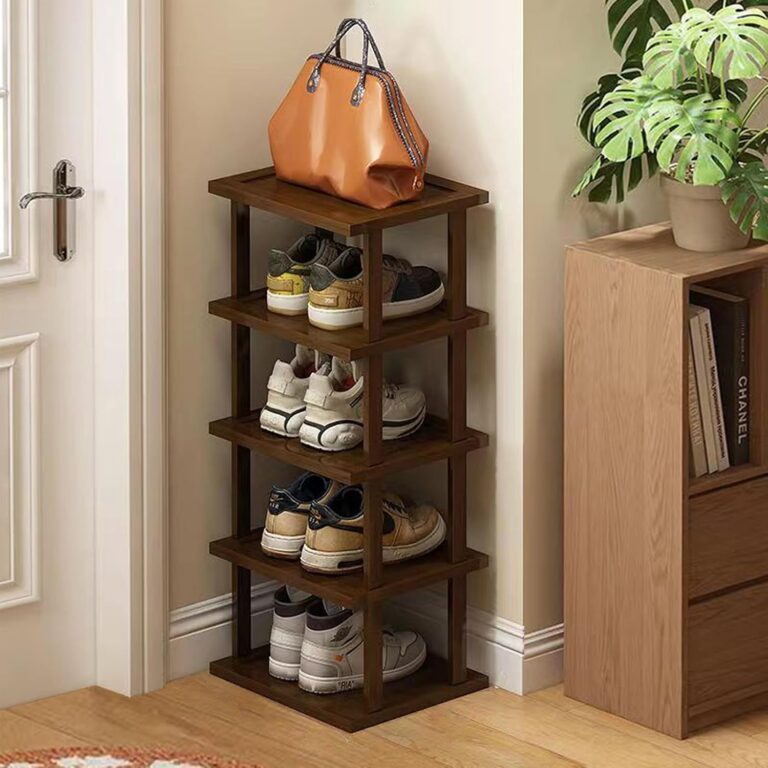
In a small entryway, go up rather than out. A tall, narrow rack about a foot square holds more pairs per square foot of floor than any bench or low rack. Before you buy, check three things: the rack stays out of the door’s swing, it leaves a clear path to walk through, and its shelves are deep enough for the biggest shoes in the house.
Shoes collect by the front door because that’s where they come off. In a narrow hall or a front door that opens straight into the living room, a pile of six or eight pairs is enough to make the whole space feel cluttered. The fix is usually one piece of furniture, as long as it’s the right shape for the spot.
What to measure first
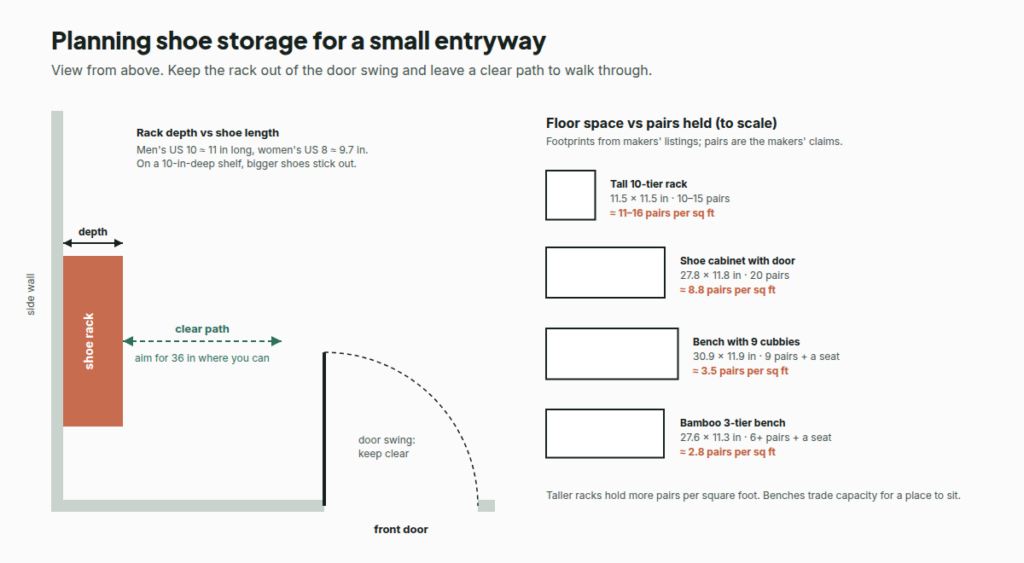
- The door swing. Open the front door all the way and note where it ends up. Anything in that arc gets hit every time someone comes in. Measure the wall space that’s left beside or behind it.
- The walkway. Measure from the wall where the rack will go to the opposite wall or furniture, then subtract the rack’s depth. What’s left is your path.
- The longest shoe. Measure the biggest pair in the house, heel to toe. That’s the shelf depth you need if you don’t want toes hanging over the edge.
- The height. Check for a light switch, a thermostat, a window sill or a coat hook above the spot.
How much room should you leave to walk?
For hallways, the model building code most US homes are built to sets a minimum width of 3 feet (International Residential Code, section R311.6). That rule covers how a hall is built, not what you put in it, but 36 inches is a useful target for the space left after the rack goes in. If your hall is 42 inches wide, that points to a rack no deeper than about 6 inches, which almost nothing is. In a hall that tight, put the rack in a corner or behind the door’s open position instead of along the path.
Will your shoes fit on the shelf?
Most slim racks are 10 to 12 inches deep. Nike’s size chart lists a men’s US 10 at 28 cm, about 11 inches, and a women’s US 8 at roughly 9¾ inches (Nike men’s shoe sizing). So a 10-inch-deep shelf suits most women’s and kids’ shoes, while larger men’s shoes will overhang by an inch or so. That’s usually fine on an open rack, but it can stop a cabinet door from closing. Boots are the other problem: check the gap between shelves, or pick a rack with a removable shelf.
Floor space against pairs held
We divided each maker’s stated capacity by the floor area of its footprint. These are listing claims, not our counts, and “pairs” depends on shoe size, but the gap between types is large enough to be useful:
| Storage | Footprint (W × D) | Height | Pairs (maker) | Pairs per sq ft |
|---|---|---|---|---|
| Tall narrow 10-tier rack | 11.5 × 11.5 in | 66.9 in | 10–15 | About 11–16 |
| Shoe cabinet with door | 27.8 × 11.8 in | 25.2 in | 20 | About 8.8 |
| Bench with 9 cubbies | 30.9 × 11.9 in | 18.9 in | 9 | About 3.5 |
| Cushioned 3-tier bench | 30.7 × 12 in | 17.3 in | 6 + 2 boots | About 3.1 |
| Bamboo 3-tier bench | 27.6 × 11.3 in | 17.8 in | 6 or more | About 2.8 |
The tall rack wins on floor space by a wide margin. Its listing gives a 100 lb total load, but a 67-inch rack on an 11.5-inch base is top-heavy, so keep heavy boots on the bottom and anchor it to the wall if it comes with a strap or you have kids. The fabric cabinet holds the most pairs in a low, wide shape and hides them behind a door.
Tall and enclosed options for tight spots
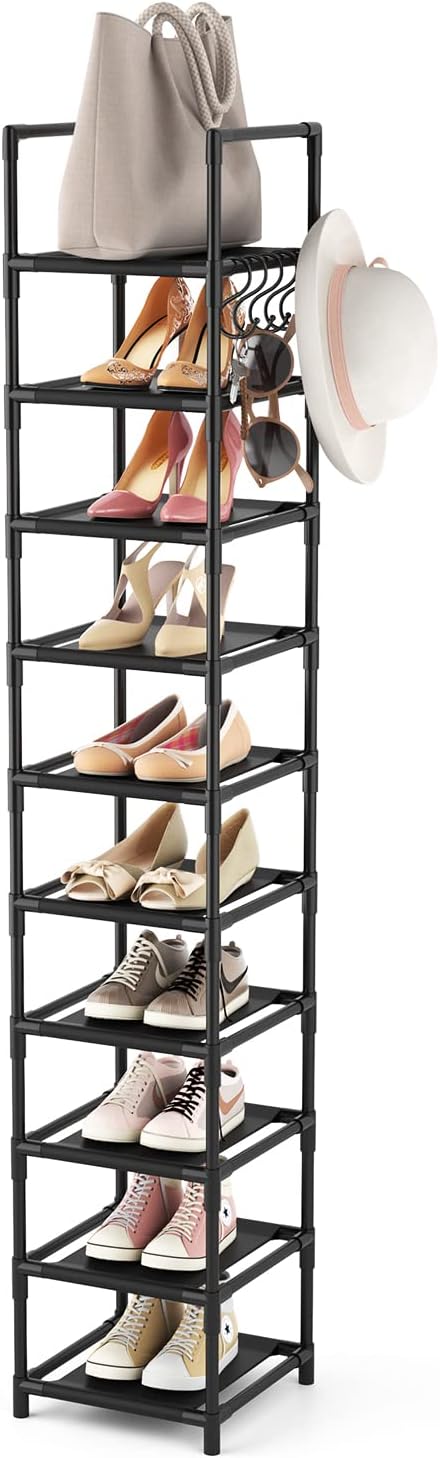
Tall Narrow 10-Tier Shoe Rack for Entryways
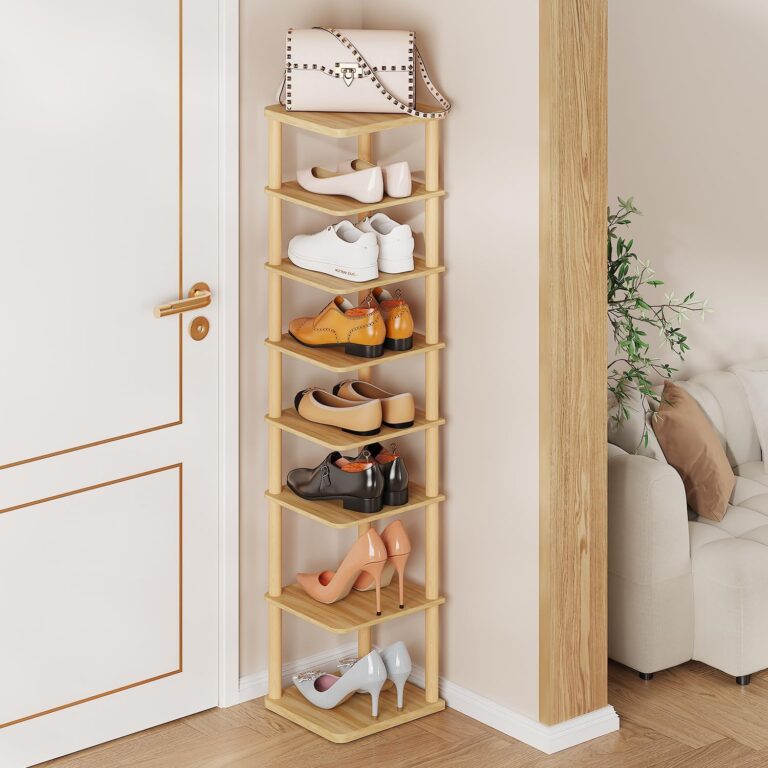
8-Tier Tall Narrow Wooden Shoe Tower (48.3" Tall)
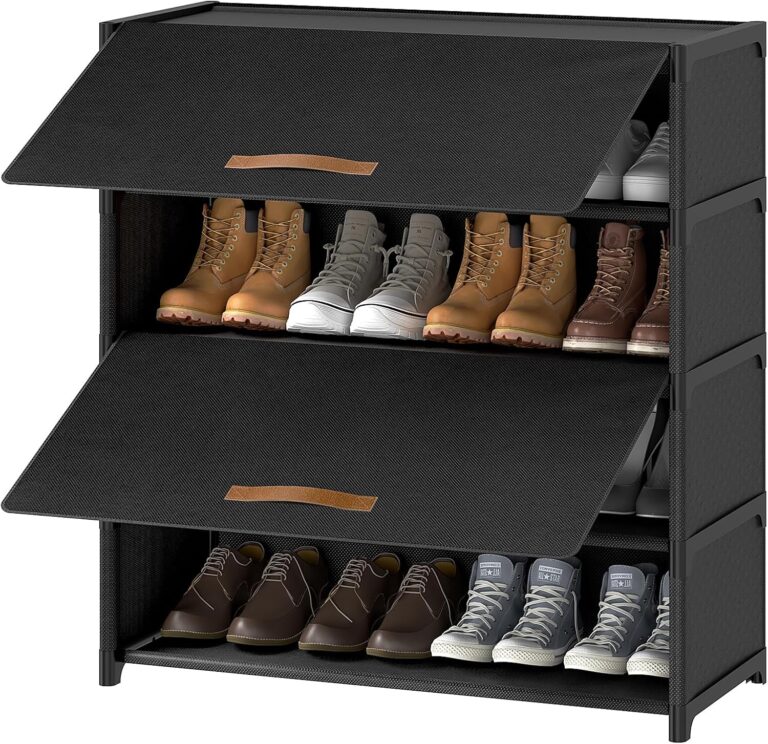
5-Tier Non-Woven Shoe Cabinet with Door (20 Pairs)
When a bench is worth the space
A bench holds a third as many pairs per square foot, but it gives you somewhere to sit while you put shoes on. If anyone in the house needs that, or you lace boots every morning, it’s a fair trade. Look for one that’s no deeper than about 12 inches so it doesn’t eat into the walkway. The bamboo bench‘s listing says it seats two, with each shelf rated to 22 lb.
Shoe benches for a narrow hall
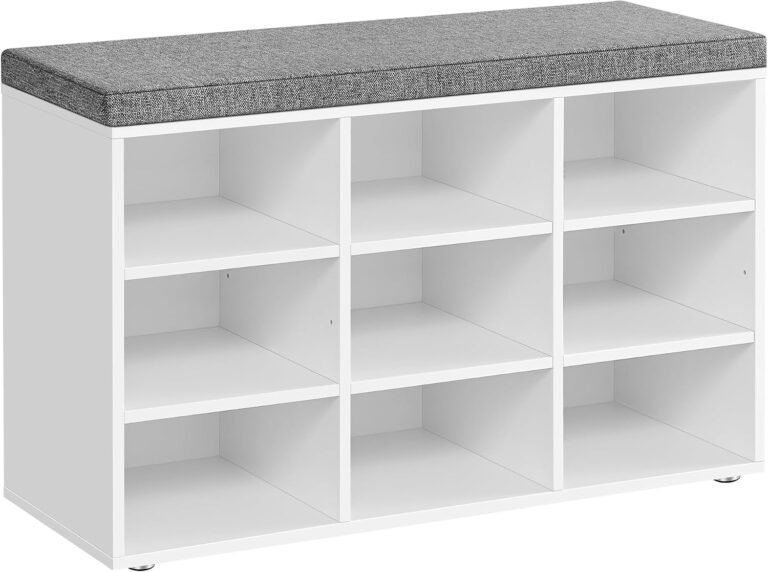
Entryway Shoe Storage Bench with Cushion (9 Cubbies)
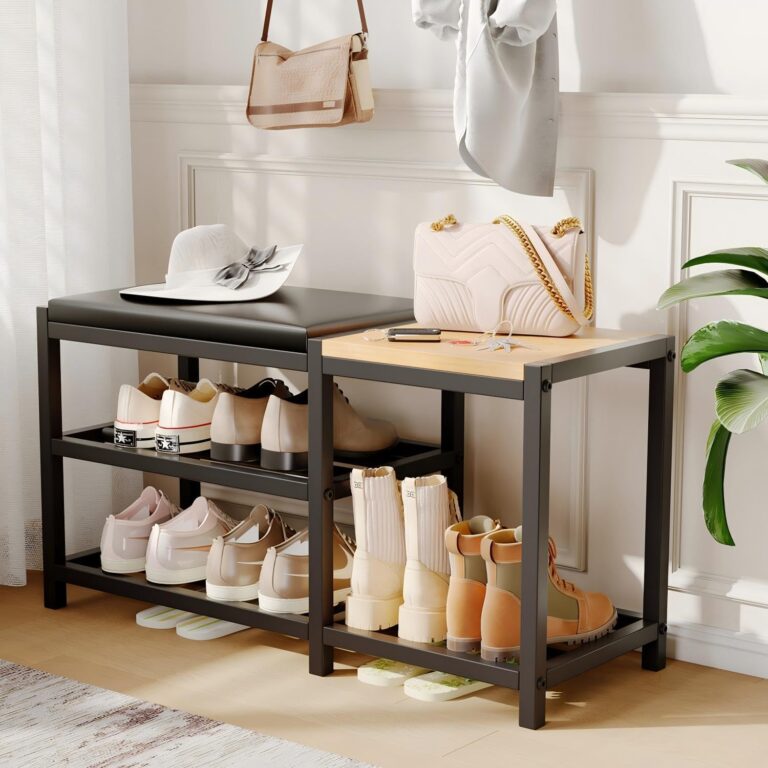
3-Tier Cushioned Shoe Bench with Shoe Rack (Black)
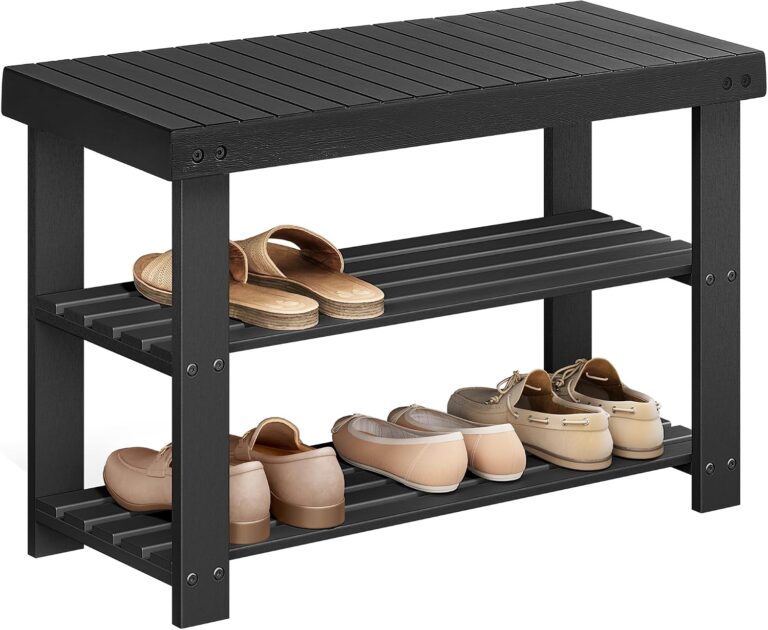
3-Tier Bamboo Shoe Bench for Entryway (27.6" Wide)
If the space changes or you rent
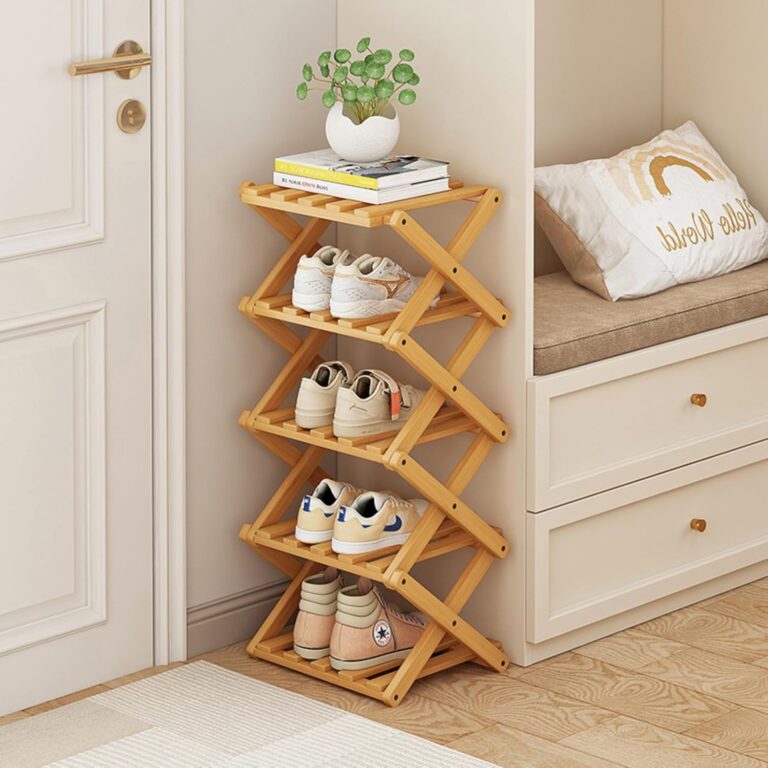
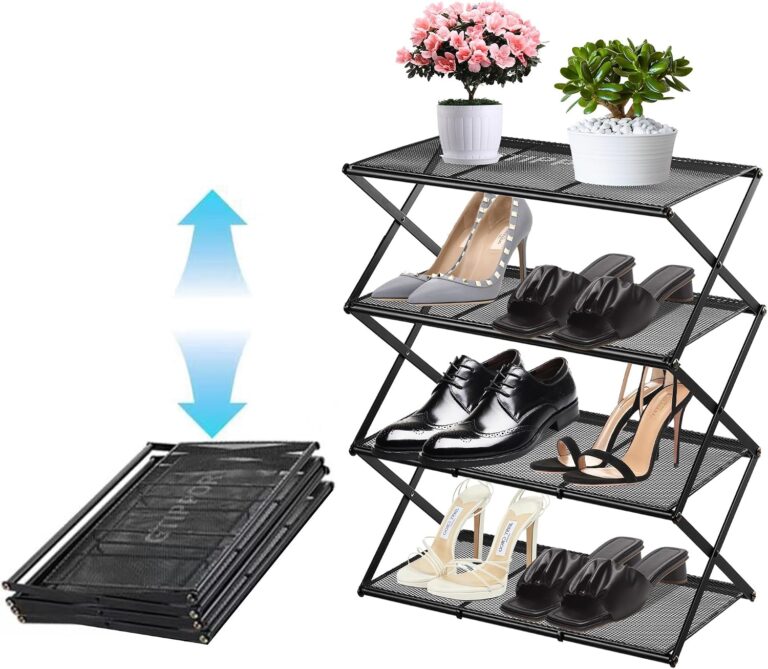
Foldable and stackable racks are easier to move and need no drilling. The foldable bamboo rack needs no assembly per its listing. The 5-tier bamboo rack is only 10 inches wide, narrow enough for the space beside a door frame. If coats are piling up as well as shoes, a standing coat rack next to the shoe rack keeps both off the floor without screws in the wall.
Racks that move with you
Which one should you buy?
Match it to the space you measured:
- Most pairs in the least floorTall Narrow 10-Tier Shoe Rack for EntrywaysShop now
- Shoes out of sight5-Tier Non-Woven Shoe Cabinet with Door (20 Pairs)Shop now
- A seat and nine pairsEntryway Shoe Storage Bench with Cushion (9 Cubbies)Shop now
- A 10 in gap by the door5-Tier Vertical Bamboo Shoe Rack for Small SpacesShop now
- Boots and shoes together8-Tier Tall Narrow Wooden Shoe Tower (48.3" Tall)Shop now
If your entryway is also where bags and coats land, browse all entryway storage, or check a rack’s size against your space with the Will It Fit? tool. For the gap beside an appliance, our guide to fitting a slim rolling cart uses the same measuring approach.